
Islands Like Us
Islands Like Us (ILU) is an educational book series that considers the special challenges met by Small Island Developing States (SIDS) in the face of climate change.
The Islands Like Us (ILU) book series was developed to present environmental information in a manner that encourages personal responsibility and demonstrates how individual actions contribute to not only global progress, but specific progress within the region. Its primary function was to serve as an educational bridge, replacing high level post-hoc reporting with a digestible format designed to demystify technical jargon and diminish conflicting media reports through thoroughly researched content tailored to island nations.
This initiative was established as a proof of concept through the idea2innovation challenge, sponsored by the Ministry of Planning and Sustainable Development and the Council for Competitiveness and Innovation.
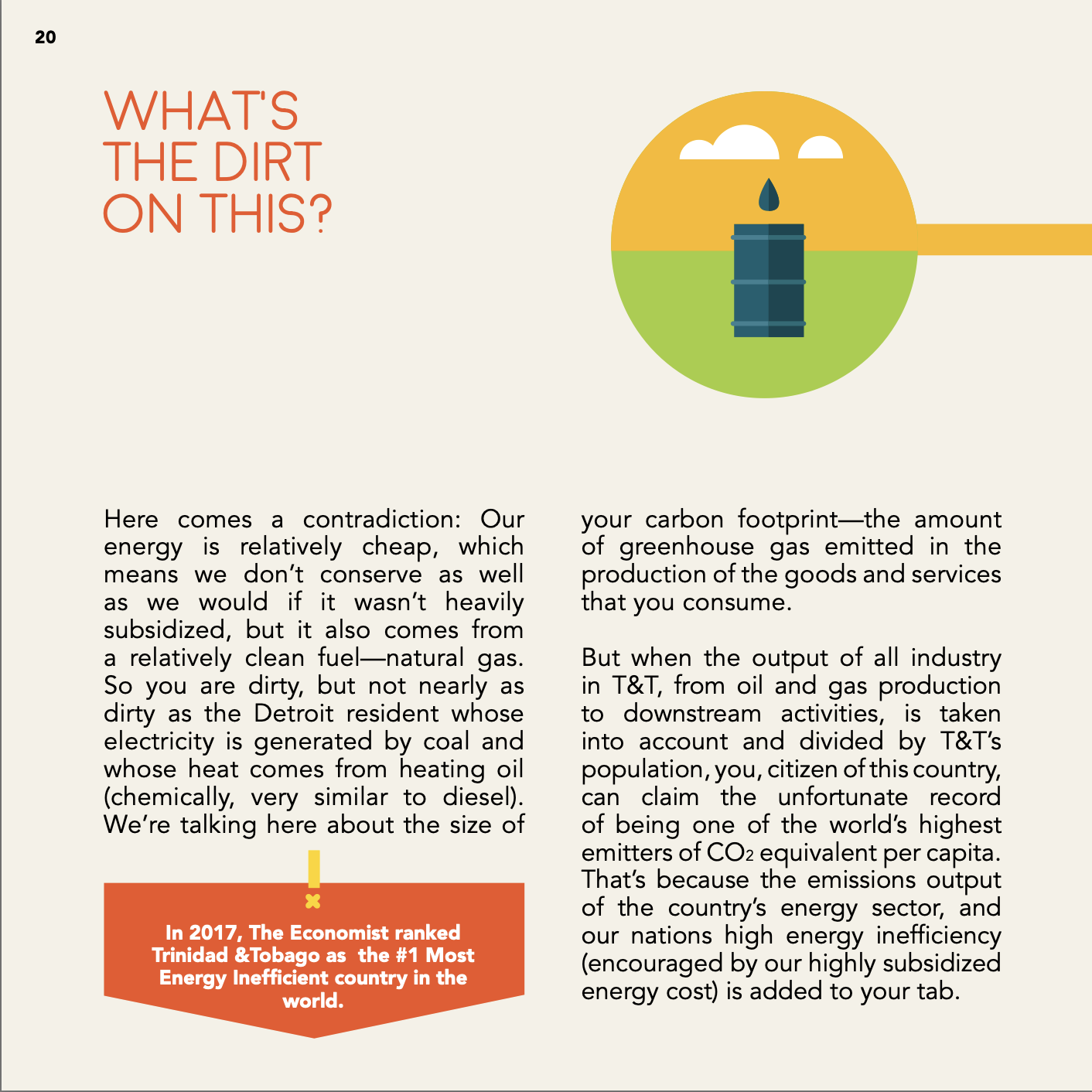
During the developmental phase of the series in 2019, a pilot survey revealed that 91% of participants felt they were not receiving sufficient information on climate change from official State sources. This gap identified a critical requirement for accessible and fact-based educational materials that addressed climate issues from a regional perspective. While the first booklet focused on Trinidad and Tobago, the underlying template was designed as a methodology to make information accessible across the Caribbean archipelago.
The structural goal of ILU was the development of regional capacity through improved communication and the belief that personal responsibility, supported by accurate information, was a practical tool for addressing regional challenges rather than an individual burden. By presenting localized data on energy transition, waste management, and climate resilience, the series provided citizens with the analytical tools necessary to understand their specific environmental context.
Ultimately, the series served as an informational baseline ensuring that the shared vulnerabilities and innovative activities of island states were documented and understood by the populations they affected, ensuring that a better informed audience became a participating one for the collective benefit.
To read the full booklet, Islands Like Us – Trinidad & Tobago visit the link below:
Gallery


